How to write a funeral speech
A funeral speech is the same thing as a eulogy: a few minutes about the person who has died, given by someone who knew them. You may have been asked because you were closest, or because you are the one who can get through it. Either way the task is small and clear. Help the room see them once more.
Six parts, three to five minutes, about 400 to 650 words. Nobody expects a performance. They expect you to be accurate about someone they loved.
00:01The structure
6 sections, in this order.
-
01
Opening
Who were they to you, and who has come to remember them?
Say their name, say who you are to them, and thank people for coming. Three sentences. A plain start gives you something steady to stand on.
-
02
Story
Which story sounds most like them?
One story that sounds like them. Use the details: what they said, what they were doing, what went wrong. If people laugh, that is recognition, and it is allowed.
-
03
Quote
What did they always say?
Something they used to say, or a poem, verse or lyric they loved. Their own words do more than anything you can write for them.
-
04
Story
What ordinary thing did they do that says more than the big moments?
A smaller story. A habit, a Sunday routine, how they answered the phone. The ordinary things are what people miss most.
-
05
Moment
What do you want the room to stop and think about for a moment?
Say their name and pause. Write the pause into your notes so you do not have to decide on it while standing there.
-
06
Closing
How would they have said goodbye?
End the way they would have. If they were funny, the last line can be funny. Then say goodbye in one sentence and sit down.
00:02The rules
The rules of the room.
Structure carries the speech; these keep it out of trouble.
- Three to five minutes. Ask whoever is leading the service how long you have.
- Write every word out and print it large. This is not the day to speak from memory.
- Read it aloud beforehand at least twice. The second time is when your voice learns where it breaks.
- If you cannot continue, stop, breathe and look at the page. The room will wait.
- Give a copy to someone who can finish it for you. You will probably not need them.
00:03Questions
Asked before every funeral speech.
- What is the difference between a funeral speech and a eulogy?
- There is none in practice. Eulogy is the formal word for a speech in memory of someone who has died. Funeral speech, memorial speech and tribute are used for the same thing.
- How long should a funeral speech be?
- Three to five minutes, which is about 400 to 650 words at a calm pace. If several people are speaking, aim for three.
- How do I start a funeral speech?
- With their name and your relationship to them. “My name is Anna, and Erik was my older brother” is enough. You do not need a quote or a grand opening.
- What should I not say in a funeral speech?
- Leave out old conflicts, anything the family would not want shared, and a full list of their achievements. Two stories told well say more than a life summarized.
00:04In the app
From outline to on time.
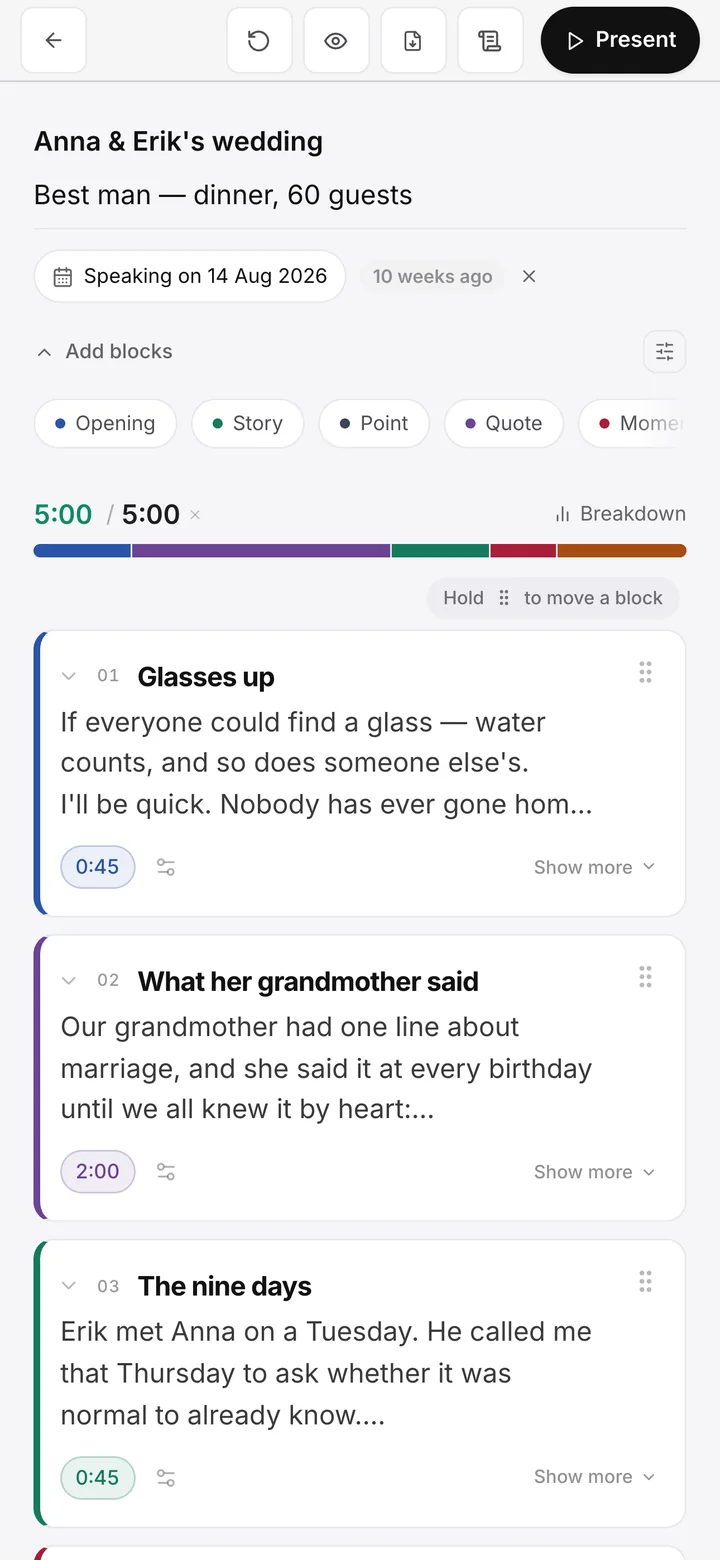
Every section gets a time, and the total tells you whether you will fit your slot. You write your lines directly inside each block, so the words and the shape never drift apart.
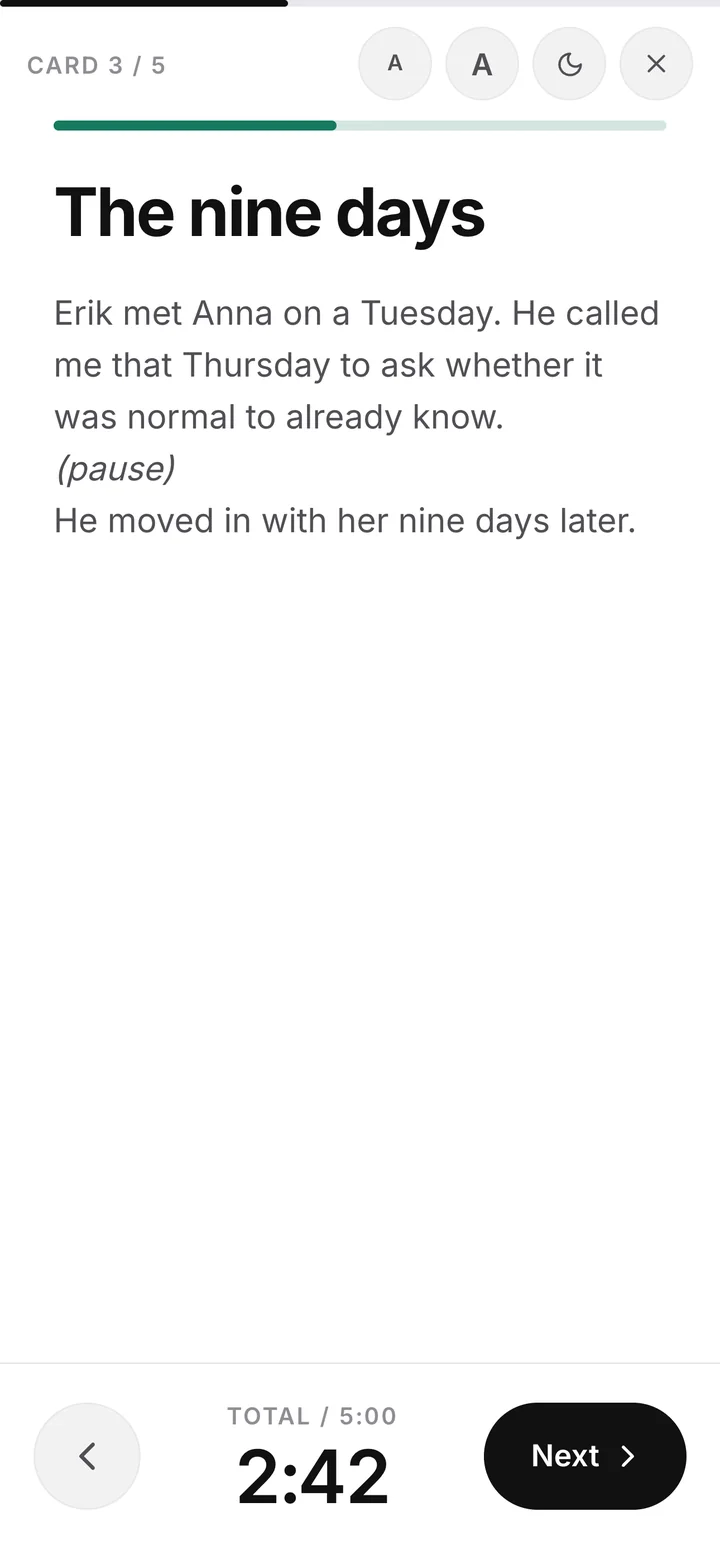
When it is time to deliver, the same outline becomes full-screen cue cards with a stage clock, or a teleprompter that follows the pace you planned.
Open this outline now Download on the App Store How long will it run? Use the speech time calculator → Thinking of letting AI write it? Read this first →
00:05Related
Other shapes for the same room.
A tribute that honors a life through specific, vivid stories — 3–5 min
Celebrate a career through stories and thanks
Thank someone properly on their last day — warm, specific, not a eulogy, 3–4 min
Brief, grateful and specific — 60–90 seconds
Say thank you so they feel it — 2 min
From the invited speaker or a teacher — look back, one lesson, send them forward
 SpeechDraft
Open this outline in SpeechDraft.
The funeral speech uses the eulogy outline, one of 64 in the app. Writing is free and never limited.
Free to start. Pro is $9.99, once.